Secure Critical Infrastructure. Prove It Continuously.
Finite State gives Energy & Utilities teams continuous, evidence-backed visibility into what's deployed, what's exploitable, and what it can reach across long-lived, firmware-based systems. Built for NERC CIP evidence and Bulk-Power EO due diligence.

Nation-State Attacks
Sophisticated threats targeting critical infrastructure

Grid Interconnection Risk
Vulnerabilities in interconnected power systems

Legacy SCADA Systems
Aging control systems with security gaps
Your Suppliers Attest. The Bulk-Power EO Asks You to Verify.
The Executive Order on Securing the U.S. Bulk-Power System, signed August 26, 2026, declares a national emergency over foreign-produced equipment in U.S. energy infrastructure. It reaches equipment used in bulk-power facilities rated 69 kV and above. That threshold sits below NERC's 100 kV Bulk Electric System line, which pulls in assets most utilities have never inventoried this way: substation transformers, protective relays, grid-connected inverters, battery energy storage, industrial control systems, and the software, firmware, and remote-access capabilities that ship with them.
Two Obligations for Utilities
- Due diligence at the time of transaction — ownership and design origin have to be established at the component level before equipment is procured or connected. Country-of-manufacture paperwork doesn't answer that test.
- Risk management for fielded systems — DOE can impose conditions on equipment already in service, including requirements to identify, isolate, monitor, secure, disconnect, replace, or remove it.
DOE's implementing rules are due December 24, 2026, and the specifics aren't public yet. What's already clear is the kind of evidence utilities will need, and it goes beyond a supplier attestation.
Blind Spots Increase Risk Across Critical Infrastructure
Product security for critical infrastructure operates under constraints most software teams do not face:
- Long-lived assets: Devices remain in service for years or decades, often with limited maintenance windows.
- Firmware-heavy systems: Risk exists in compiled binaries, third-party components, and vendor firmware, not just source code.
- Operational impact: Security incidents can disrupt service, affect safety, and trigger regulatory scrutiny.
- Ongoing oversight: Compliance extends beyond release and must be defensible after incidents occur.
These realities make point-in-time assessments and generic AppSec tooling insufficient.
Most security tools were designed for fast-moving web applications, not critical infrastructure.
As a result, Energy & Utilities teams face:
- Incomplete visibility: Source-only scanning misses what is actually present in firmware and vendor binaries.
- Unmanageable noise: CVE volume without a defensible way to distinguish exploitable risk from theoretical exposure.
- Slow response: Manual correlation across spreadsheets, emails, and institutional knowledge.
- Fragile evidence: Documentation drifts as software, suppliers, and systems change over time.
This gap leaves teams reactive when incidents or audits occur.
How Finite State Fits Into Energy & Utilities Workflows
Energy & Utilities security workflows span long deployment cycles, evolving risk, and repeated review.
Finite State supports these workflows by grounding security decisions in what is actually deployed and preserving that context as systems, disclosures, and requirements change.
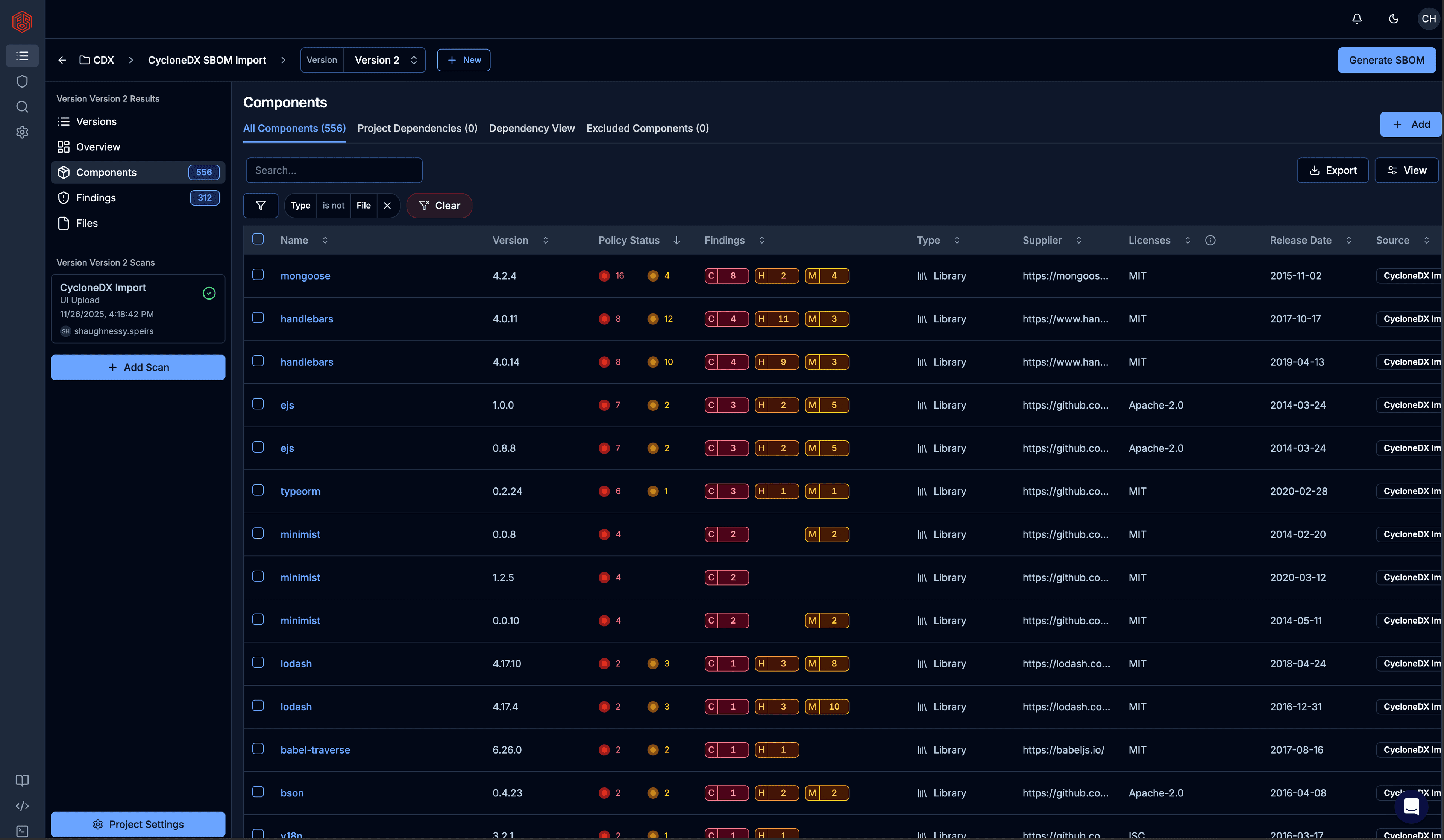
Extract software components directly from firmware and binary images to identify third-party libraries, vendor-supplied components, and custom RTOS builds. SBOMs, VEX decisions, verification results, and change history remain tied to specific versions over time. When metadata or symbols are missing, findings are explicitly flagged to distinguish verified results from items requiring review.
Real-Time Power Grid Vulnerability Monitoring
Visualize and prioritize cybersecurity risks across your power generation, transmission, and distribution infrastructure with continuous monitoring and automated threat detection.
Critical Assets
+1 this week
High Risk
+2 this week
Total Assets
No change
Avg. Resolution
-3 days
Grid Infrastructure Risk Map
Generation Plants
Generation Plant A
70/100
Generation Plant D
85/100
Generation Plant G
85/100
Generation Plant J
85/100
Generation Plant M
85/100
Transmission Hub
Transmission Hub B
85/100
Transmission Hub E
85/100
Transmission Hub H
85/100
Distribution Centers
Distribution Centers A
85/100
Distribution Centers B
85/100
Generation Plant A
Legacy SCADA system with 12 critical vulnerabilities
Coverage
Covered
Partial
Critical
Built for Real-World Compliance in Energy & Utilities
Compliance in Energy & Utilities is shaped by persistent operational risk and formal regulatory oversight, requiring security decisions to remain defensible as systems, threats, and requirements evolve.
Finite State supports this by preserving analysis and decision context directly alongside deployed software over time.
Regulatory Requirements
NERC CIP Standards
North American Electric Reliability Corporation Critical Infrastructure Protection
Requirements
Cyber Security — BES Cyber System Categorization
Categorization of BES Cyber Systems and associated assets. Evidence: one-click export.
Cyber Security — Security Management Controls
Security management controls for BES Cyber Systems. Evidence: one-click export.
Cyber Security — Electronic Security Perimeter(s)
Electronic Security Perimeter controls. Evidence: one-click export.
Cyber Security — System Security Management
System security management controls. Evidence: one-click export.
DOE Cybersecurity Framework
Department of Energy cybersecurity capability maturity model
Requirements
Asset Identification & Management
Inventory and control of energy delivery systems
Threat Intelligence & Assessment
Proactive threat detection and vulnerability management
Cybersecurity Risk Assessment
Risk-based approach to cybersecurity investment
Incident Response Planning
Coordinated response to cybersecurity incidents
Bulk-Power System Supply Chain EO
Executive Order 14421, Declaring a National Emergency to Secure the United States Bulk-Power System (91 FR 55995)
Requirements
Transaction Due Diligence
Ownership and design origin established before equipment is procured or connected.
Fielded-System Risk Management
Identification, isolation, monitoring, or removal of in-service equipment in scope of the order.
Component & Firmware Inventory
Direct binary analysis of delivered equipment. Evidence: one-click export.
Remote-Access Capability
Enumeration of remote-access paths, update mechanisms, and radios present in firmware.
Need to Continuously Secure Critical Infrastructure?
See how Energy & Utilities teams reduce exposure—and defend their decisions—with Finite State.