CRA Readiness Assessment: What It Checks and How to Start
Explore simple, high-impact steps product manufacturers can take today to reduce risk and begin meeting EU Cyber Resilience Act requirements.

Dario Lobozzo
GM, EMEA
TL;DR
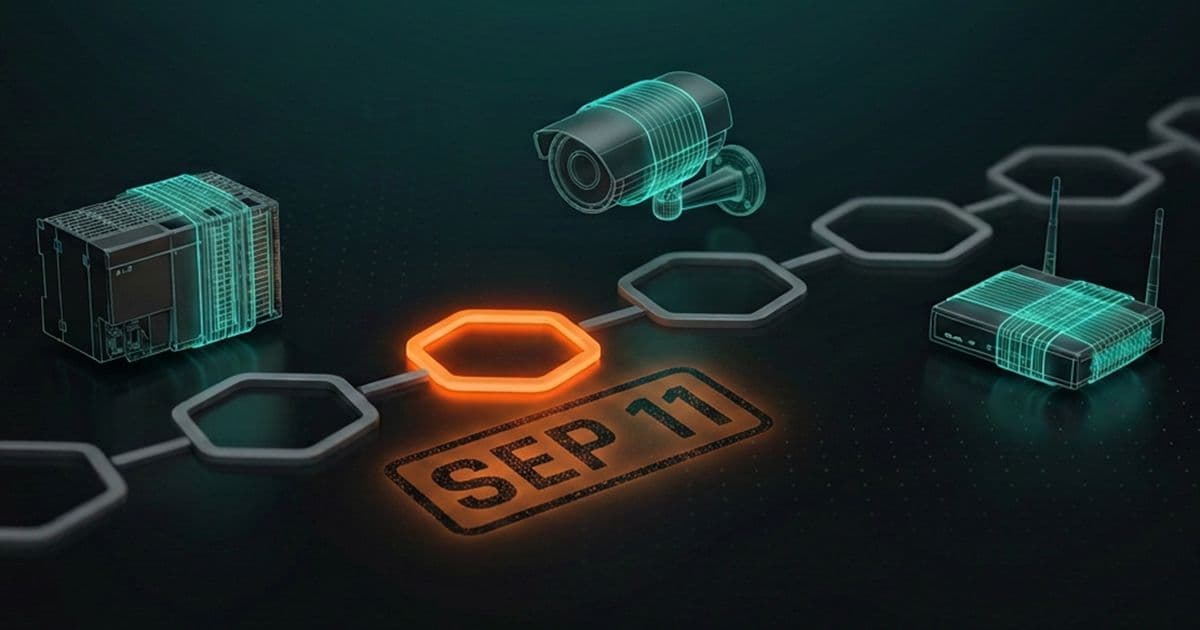
A CRA readiness assessment scores your products against the EU Cyber Resilience Act's essential requirements and tells you which gaps to close first. Most assessments on the market are questionnaires, so they score what your team believes ships. The ones worth acting on are grounded in evidence from the binary you actually shipped. Vulnerability and incident reporting obligations apply from 11 September 2026, and full CRA compliance applies from 11 December 2027, so the useful assessment is the one you can run in days.
For many software-defined product manufacturers, the EU Cyber Resilience Act (CRA) feels like a massive, multi-year undertaking. In many ways it is. Full compliance requires cross-functional coordination, repeatable disclosure processes, and the ability to manage software risk across complex global supply chains.
But not every step needs to be long-term or high effort. Some of the highest-impact moves you can make right now are also the most straightforward. It starts with knowing where you stand.
What is a CRA readiness assessment and why does an organization need one?
A CRA readiness assessment measures your products against the Cyber Resilience Act's essential requirements, scores your gaps, and ranks what to fix first.
That ranking is the point. The CRA applies to a wide range of connected hardware and software, but not every product in your portfolio carries the same exposure or the same urgency. A readiness assessment turns a 300-page regulation into a short list of things your team owns, with names and dates attached.
You need one for three practical reasons. First, scope: you can't comply with a regulation until you know which of your products are in scope and which conformity route applies to them. Second, evidence: the CRA doesn't reward good intentions, it requires technical documentation you can hand to a market surveillance authority or a notified body. Third, sequencing: with reporting obligations already live in September 2026, the difference between a program that lands and one that scrambles is usually just the order in which work got done.
If you want the regulation itself explained before you assess against it, start with our EU Cyber Resilience Act overview.
Start with a Targeted Product Risk Assessment
The CRA applies to a wide range of connected hardware and software, but not every product in your portfolio poses the same level of exposure or urgency. One of the most efficient ways to begin your readiness journey is to conduct a targeted risk assessment to identify which products or product lines:
- Are already in the market and subject to CRA’s continuous monitoring expectations
- Contain complex or opaque software supply chains
- Rely heavily on third-party components or inherited code
- Are nearing a regulatory deadline or strategic milestone (such as a product launch or certification)
Prioritizing these high-risk areas allows your team to focus early efforts where they matter most, without trying to boil the ocean.
Finite State offers light-touch readiness assessments to help organizations quickly identify these risk concentrations and determine which products to evaluate or monitor first.
Deploy a Lightweight SBOM and Vulnerability Analysis Pilot
One of the most immediate and tangible steps a manufacturer can take is to ingest an SBOM (software bill of materials) for a representative product and analyze it for known vulnerabilities. This pilot provides near-instant visibility into your current exposure, identifies gaps in component transparency, and gives your team a starting point for discussions around remediation, ownership, and disclosure workflows.
This doesn’t require a full rollout or organizational overhaul. Using the Finite State platform, teams can begin scanning binaries or ingesting SBOMs in days—not weeks—and start building institutional familiarity with vulnerability triage, EPSS scoring, and contextual prioritization.
Even a single SBOM analysis can serve as a proof point to leadership and a foundation for expanding the program.
Identify and Align Internal Stakeholders
CRA compliance is not just a security or engineering responsibility. It requires collaboration across product, legal, compliance, finance, and executive functions. But in many organizations, these stakeholders are not yet aware of how CRA will impact their roles or what kind of support they’ll need to provide.
An early and effective step is to identify the internal stakeholders who will need to participate in CRA processes, such as vulnerability disclosure review, audit preparation, or SBOM quality assurance. Start building relationships, aligning expectations, and sharing early findings from assessments or pilots.
This doesn’t require a fully staffed compliance program. A simple working group or shared document can provide a structure for early collaboration and prevent delays when regulatory deadlines approach.
Evaluate Technology Gaps in the Toolchain
Another productive early step is to audit your existing tools to understand where your current processes fall short of CRA expectations. For example:
- Do you have a system of record for SBOMs across product versions?
- Can you track vulnerabilities across both source code and binaries?
- Do you have a process for validating third-party SBOMs and identifying discrepancies?
- Can you generate machine-readable VEX documents with supporting evidence?
Identifying these gaps helps avoid future surprises and can guide initial investments that align with your organization’s strategic roadmap. Even if you’re not ready to commit to a full platform deployment, understanding where your current tooling ends is a valuable insight in itself.
How long does a CRA readiness assessment take?
Self-service questionnaires take under an hour. An evidence-backed assessment of a representative product takes days, because the binary has to be analyzed rather than described.
Use both, in that order. The questionnaire tells you whether you're in scope and gives you a rough grade in an afternoon. The evidence-backed assessment tells you whether that grade survives contact with the shipped artifact. One is a conversation starter. The other is what you file.
What should you do with a CRA readiness assessment once you have it?
Turn the findings into a dated remediation plan with named owners, then re-run the assessment on the same product to confirm the gaps actually closed.
A readiness report that sits in a folder changes nothing. The organizations moving fastest right now treat the assessment as a baseline they measure against, not a one-time score. They fix the pass/fail items first, which is almost always SBOM coverage and the reporting workflow, because those two block market access. Everything else gets sequenced against release dates.
Final thought: small steps, real momentum
CRA compliance is a long-term commitment. The path forward doesn't have to be overwhelming. The organizations making the fastest progress today are the ones that started small, by identifying high-risk products, running pilots, and aligning stakeholders one step at a time.
Quick wins reduce exposure, validate assumptions, and create the early proof that funds bigger efforts. With the right technology and advisory support, they can be implemented with minimal disruption and immediate returns.
Compliance doesn't have to start with a transformation. It can start with an honest assessment of what you actually ship.
Tags
Dario Lobozzo
GM, EMEA
Dario Lobozzo is General Manager EMEA/APAC at Finite State, where he helps manufacturers navigate evolving global regulations like the EU CRA, NIS2, and MDR. With over a decade of experience in product security and go-to-market leadership, he specializes in aligning compliance with practical, resilient security strategies.