CRA Compliance Is a Full-Time Job. Most Teams Don't Have That.
EU CRA reporting obligations start in September 2026. Finite State's managed CRA service delivers five maintained compliance outputs for a designated product—without adding headcount or building internal tooling.

Finite State Team
I talk to product security teams across Europe every week. Smart people, deep expertise, genuinely committed to doing the right thing on security. And almost every one of them is staring at the CRA with the same expression—somewhere between overwhelmed and resigned.
Not because they don't understand the regulation. But because they do.
They know what's actually required. A living SBOM maintained across every firmware release. A documented risk assessment with Annex I traceability. Continuous vulnerability monitoring post-shipment. Managed disclosure workflows supporting 24-hour, 72-hour, and 14-day ENISA reporting timelines. A full technical documentation package. A Declaration of Conformity. For every designated product. Maintained indefinitely.
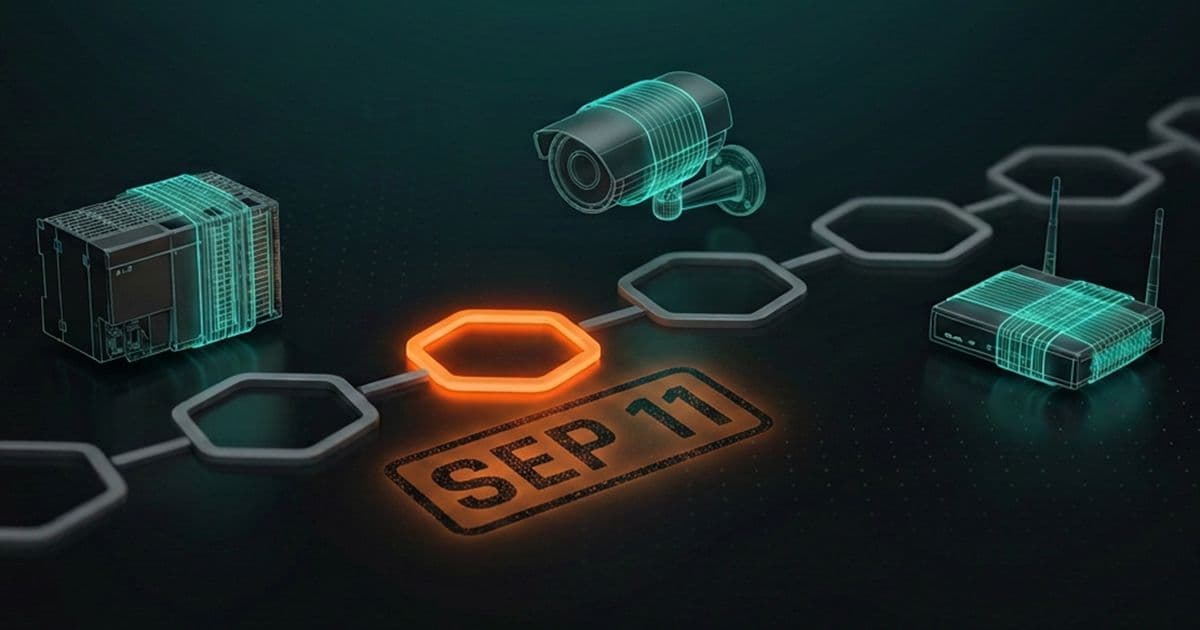
And they know the clock is running. Reporting obligations apply September 11, 2026—that's the first hard deadline, and it requires time-bound disclosure workflows to be operational before then. Full compliance, including all technical documentation and evidence, is required by December 11, 2027. For complex firmware products, getting there takes longer than most teams expect.
That's not a project. That's a function. And most teams I talk to are two, maybe three people—already buried in CVEs, supporting engineering, running threat reviews, keeping up with the vulnerability landscape. CRA is asking them to essentially build a new compliance program on top of everything else they're already doing.
So the question isn't "do you want to be compliant?" Everyone does. The question is how.
Where Things Usually Get Stuck
The most common thing I hear isn't "we don't know the regulation." It's three things, usually in this order.
We don't know where to start.
The CRA text is dense, cross-referential, and specific in places that feel abstract until you're actually trying to produce the artifacts. What does "machine-readable SBOM" mean in practice? What format does ENISA actually accept? How does Annex VII structure a technical documentation package? Teams spend weeks in the regulation before they've written a single line of an SBOM.
We don't have the headcount.
SBOM generation, vulnerability monitoring, disclosure management, documentation maintenance—these aren't one-time tasks. They're ongoing functions. Even teams that have the expertise to do this work often don't have the bandwidth. And hiring for it—if you can find the people—takes months.
The deadline feels far away until it doesn't.
September 11, 2026, is when reporting obligations kick in. December 11, 202,7 is when full compliance is required. That sounds like a runway. But producing auditor-grade compliance artifacts for a complex firmware product takes longer than expected—especially if it's your first time. The teams doing this properly aren't starting in Q4 2026.
What Finite State Offers—Starting Where You Are
We didn't build one product for CRA. We built a portfolio because different teams are in different positions.
Finite State Product Security OS: For teams who want to own the process. Automated SBOM generation from binary analysis—no source code required—continuous vulnerability management, CVE monitoring, license compliance, and centralized evidence management. If you want the infrastructure to run a mature product security program at scale, this is it.
Assurance Studio: For teams doing the risk assessment and product assurance work themselves. Structured threat modeling, controls mapping, and compliance documentation tooling. Built for the people actually doing the work.
Strategic Consulting Services: For organizations navigating CRA for the first time—or dealing with a complex product portfolio, regulatory questions, or legacy products. We've helped manufacturers across industrial IoT, medical devices, consumer electronics, and automotive understand exactly what CRA means for their specific situation.
Product Security Services: For teams that need hands-on support—threat modeling workshops, vulnerability assessments, documentation artifacts—where the bandwidth simply isn't there internally.
All of these require your team to be in the driver's seat in some capacity. That's the right model for a lot of organizations.
But for Teams That Just Need the Outcomes
Some teams don't need a platform or a program. They need five maintained, compliant deliverables for one designated product, in the shortest possible timeframe, without adding internal overhead to get there.
That's what our managed CRA compliance service is designed for.
Sign an engagement. Upload a firmware binary and some basic product context. We do the rest.
Within 1–2 weeks, you have five maintained deliverables—each generated from the designated product and kept current as it evolves:
- Living SBOM—binary-derived software inventory generated from firmware, no source code required; delivered in SPDX and CycloneDX formats, stored and auditable, updated with every new product version
- Cybersecurity Risk Assessment—structured threat model, control mapping with full CRA Annex I traceability, gap analysis and remediation guidance, retained as a compliance artifact
- Continuous Product Vulnerability Monitoring—ongoing correlation against 250+ vulnerability intelligence sources, VEX-backed context maintained throughout, active from day one of the engagement
- Managed Vulnerability Disclosure Support—when a CVE affects your product, we draft notification documentation for CRA's 24-hour, 72-hour, and 14-day reporting timelines, coordinate routing for your approval and support submission; the filing remains customer-owned
- Technical Documentation Package + DoC Template—the complete Annex VII technical documentation dossier and an Annex V Declaration of Conformity template, assembled to support self-assessment and ready for regulatory review
Every filing, every alert, and every update is retained with a full audit trail throughout the 12-month engagement period.
Your team reviews. We produce and maintain.
Want to see how your product maps to these deliverables? Review the full CRA service scope →
This Is a Handoff, Not a Handhold
I want to be clear about what this is. It's not a consulting engagement where we give you a report, and you implement it. It's not a software license where you figure out how to run it. It's a fixed-scope, deliverables-based managed service—you know exactly what you're getting before you sign, and the outputs are the actual artifacts, not recommendations about them.
Compliance with the CRA is ultimately the manufacturer's responsibility. Finite State provides the supporting documentation, maintained evidence, and reporting workflows that make that self-assessment defensible. You execute the declaration, own incident response, and submit the filings.
Sign the engagement. Upload the binary. We deliver the compliance package.
Download the CRA Managed Services datasheet for a full breakdown of scope, deliverables, and how the engagement works.
Who This Is For
The managed service is the right fit if:
- You have a designated product entering the EU market and need to move faster than your current team can.
- You've been putting off CRA because you can't figure out where to start—or because starting feels bigger than your current capacity.
- You're small: one or two people in product security, or no dedicated function at all.
- You want audit-grade, maintained deliverables, not an internal best-effort attempt.
- You have a product already on the EU market that needs to get compliant before the September 2026 reporting deadline.
If you're sitting on a firmware binary, a deadline, and a team that's already at capacity—let's talk.
Not sure which path is right for you? The CRA readiness page walks through the options.
Finite State Team
The Finite State team brings together experts in cybersecurity, embedded systems, and software supply chain risk to help connected device manufacturers secure their products and comply with evolving global regulations.